1. Your work often feels like it exists between dream and reality — deeply emotional, yet grounded in the real world. How do you find that balance between truth and imagination in your images?
I think that balance lives in the quiet moments, when I’m not trying to force a photograph to mean something, but letting it reveal what’s already there. The truth is always present and imagination comes in when I allow myself to see those things differently, and to treat the real as if it were a dream. For me the two aren’t opposites; they’re reflections of each other. I’m drawn to images that feel like remembering, gentle, maybe a little uncertain, but sincere. It’s less about creating something surreal and more about slowing down enough to feel what’s real in a deeper way. In that space between what is and what could be, I believe that’s where the photograph starts to breathe.
2. You’ve spoken about starting with self-portraits as a way to understand yourself. What did you learn through that process — about your identity, your body, your voice?
When I started taking self-portraits, I was in a place where I felt completely disconnected. At university, I was deeply unhappy and constantly sick, although I didn’t yet understand why. I didn’t fit in, didn’t know what I wanted to do, and just carried this heavy sense of drifting.
It’s strange because performing had always been such a big part of me. I grew up loving the limelight, singing, dancing, being on stage, and as a teenager I started working in television, acting, doing commercials, and eventually hosting a show for kids and teens. I loved it because I was drawn to the energy of it all and to the way stories could come alive. But somewhere along the way, I lost the part of myself that felt genuine in it. The cameras showed a version of me, but not the one I truly knew.
I’ve always been fascinated by the way my mind works, by how deeply I tend to feel and notice things. I often tried to make sense of thoughts and emotions that most people might simply pass over. When I began creating self-portraits, it felt like a return, not to performance but to presence. It became a way to explore that inner world and to find language for what I couldn’t explain.
It wasn’t about being seen by others; it was about finally seeing myself when I couldn’t quite find myself. Each image became a quiet act of witnessing, proof that I was still here, still trying to understand who I was beneath the exhaustion. Photography also gave me a way to bring my dreams to life, to turn feeling into something visible, and to let the surreal parts of me breathe in the real world. I grew up in a very small town where you either fit in or disappear, and for a long time I chose to disappear. Photography slowly showed me a way back to my own voice. It taught me that visibility can be a kind of healing and that standing in front of the camera, even just for yourself, can be the first way of saying “I exist”.
3. The photography world can still feel rigid when it comes to beauty standards. How do you navigate or challenge those expectations through your lens?
The idea of beauty has always felt complicated to me. Growing up, I learned early what was considered “beautiful” and what wasn’t, and so much of it felt narrow and confining. Through my lens, I try to look at beauty as presence rather than perfection. I’m drawn to moments that feel real: the softness, the stillness, or the uneven edges that make something human. I think when you photograph from a place of care instead of expectation, beauty begins to open up.
For me, challenging those standards isn’t about rejecting beauty but redefining it. It’s about showing that it can exist in illness, in imperfection, and in the uncertain spaces we’re often told to hide. I want my images to feel like a reminder that you’re allowed to take up space as you are and to see yourself without needing to become someone else.
4. There’s a softness in your portraits that feels radical — especially in a culture that often equates strength with hardness. Do you see vulnerability as a form of rebellion?
It took me a long time to understand that gentleness could be a kind of strength. For most of my life, I felt ashamed of how deeply I felt things. I thought there was something wrong with me for being so affected, for caring too much, for not being able to toughen myself the way the world seemed to expect. But I learned to hide it, to tuck that sensitivity away beneath composure, as if feeling deeply was something to outgrow. Through photography, I’ve come to see openness in a different light. I think there’s power in allowing yourself to be seen and in refusing to turn away from emotion. So yes, I do see vulnerability as a form of rebellion because I think in a world that rewards distance, choosing to feel is an act of defiance. I believe that there’s something quietly radical about staying true to your emotions and about meeting life with your whole self, even when it hurts.
5. You’ve said that diversity without inclusion is meaningless. How do you approach representation in a way that feels authentic rather than performative?
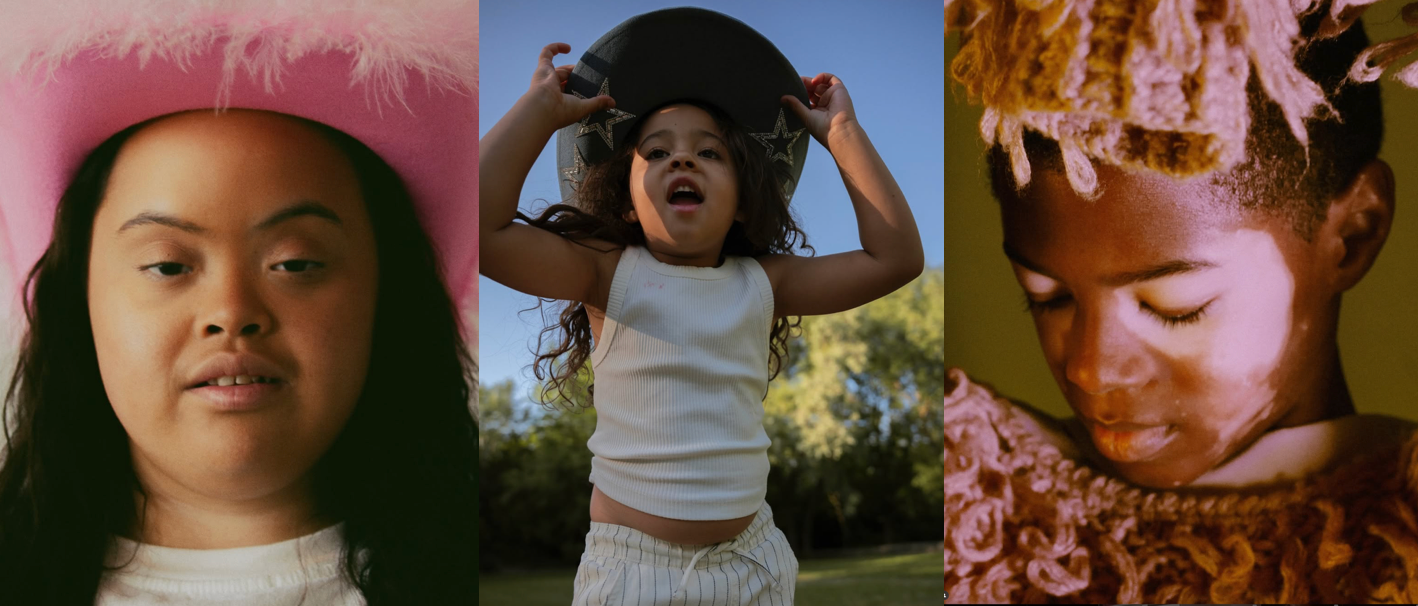
To me, representation only matters when it feels human. I’ve seen too much of it used like decoration, faces placed for the sake of proving something or stories flattened into symbols. That kind of visibility feels hollow to me. When I photograph people, I want them to feel seen, not displayed. It’s about presence, listening, and about giving space instead of taking it. In my view, authenticity lives in the small details, like the quiet in someone’s eyes, or the way they hold their breath before softening into themselves.
So to me diversity without inclusion is just an image. What matters is how we hold one another inside that image and how we allow difference to breathe instead of controlling it. My work isn’t about checking a box; it’s about creating a space where people can exist fully, exactly as they are, without needing to translate themselves.
6. Many of your images linger on the quiet — still moments, subtle gestures, the space between people. Why do you think slowness and silence are so important in your storytelling?
I wasn’t always drawn to silence. As a child, I was loud, curious, and always performing. I filled every room I entered because somewhere deep down I was afraid of what would happen if I didn’t. I think that kind of loudness was a form of protection, almost a disguise and a way of being seen before anyone could look too closely.
It took me until my late twenties to realise this, and to understand that so much of my energy back then was built on fear, not freedom. The quiet came later, when the noise stopped working. It taught me how to listen to others and also to myself. And slowness became a way to feel again.
When I make images, I want to honour that calm and give it space to breathe. I think silence lets emotion echo and patience lets it stay. Those are the moments that carry meaning. They’re fragile, but to me they hold everything. Maybe that’s why my work lingers there, because it’s in the stillness that life finally feels like itself.
7. If you could re-imagine how we teach beauty to the next generation, what would that look like?
If I could reimagine how we teach beauty, I think I would begin with kindness. I would tell the next generation that beauty isn’t something you earn or chase or hold perfectly still. It’s something that moves and changes with you.There is a loneliness in those expectations, a quiet pressure to shrink yourself until you fit inside them. For a long time, I thought beauty was something you achieved, like something fragile that could disappear if you weren’t careful.
To be honest, this is a really hard question for me, maybe because of how I grew up. In the small, perfect little town where I’m from, beauty meant being polished, put together, easy to look at and easier to understand. You learned to smile even when you were breaking, because showing anything else might make people uncomfortable. It was better to pretend that everything was fine than to let anyone see the cracks. It makes me sad sometimes, knowing how many years I spent trying to be that version of myself. Maybe that’s why I now try, through my work, to see beauty differently and to unlearn the rules I once believed in.
If I could teach beauty differently, I’d want it to feel like permission to be real. I’d want children to know that beauty isn’t the mask but what’s underneath it: the exhaustion, the gentleness, and the honesty. Maybe we’ve spent too long teaching beauty as something to become, instead of something to notice. If we taught them to find it in empathy, in curiosity, and in the courage to stay soft in a hard world, I think they would grow up seeing themselves and others with more tenderness.
8. Be Nice Youth and Revolt both stand for creative resistance — using art as a tool for change. What does artistic rebellion mean to you right now?
Right now, rebellion feels quieter to me than it used to. I used to think it had to be loud, like something that shouts and demands. To me, artistic rebellion is the moment you decide to keep creating even when no one’s watching or when everything in you whispers that it would be easier to stop. It’s choosing to make something gentle in a world that thrives on noise.
For me, artistic rebellion also means choosing truth over approval. It’s about making work that doesn’t ask permission to exist and that doesn’t smooth its edges to fit what’s expected. It’s about showing emotion without apology, and letting compassion take up space where it’s usually overlooked.
Maybe rebellion isn’t always about breaking things apart. Sometimes it’s about holding on to empathy, to imagination, and to the belief that beauty and feeling still matter. That, for me, feels like resistance: creating from the heart when everything around you says not to. I think to me, creation has always been that kind of quiet fire, one that keeps burning even when the world tries to dim it.